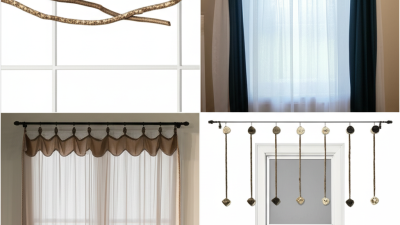
Welcome to visit Junpai Sun Shading's homepage, where you can explore a wide range of curtain products that are known for our good quality.
Welcome to contact our sales team for more details!

Hey there! So, you know how in today's global market, it's super important for international buyers to get their import certifications in order, especially for products like Heavy Duty Tension Rods? It really helps with compliance and ensuring quality. A recent report from Grand View Research mentioned that the global market for window coverings was valued at a whopping USD 33.6 billion back in 2020, and they expect it to grow at around 4.7% annually from 2021 to 2028. Pretty impressive, right? This just goes to show how much people are looking for high-quality shading solutions. Companies like Guangdong Junpai Intelligent Sun Shading Technology Co., Ltd. are really making a mark in this area. They’re a full-on enterprise that does everything from research and development to production and sales. They specialize in innovative stuff like Smart Curtain Systems and, of course, Heavy Duty Tension Rods. So, for global buyers, it’s really crucial to understand how import certifications work, that way they can snag the best quality and ensure compliance for their must-have shading products.
So, if you’re thinking about buying some heavy-duty tension rods, it's really important to get a grip on why those import certifications matter. Basically, these certifications are like a stamp of approval, showing that the products meet the safety and quality standards set by the regulatory folks. You know, I came across this study that said about 80% of shoppers really care about certified stuff, especially in areas where safety is super critical, like in construction and industrial settings. This just goes to show that you gotta make sure those tension rods meet the local standards; otherwise, you might be opening the door to some serious risks from low-quality products.
And there’s more to it! Those import certifications can actually play a big role in how well you can access the market and stay competitive. Take steel products, for example. Lots of countries have tough rules about importing steel, especially if it’s tied to national security. Remember all that buzz around the Section 232 investigation? Well, if you're dealing with uncertified imports, you could be hit with heavy tariffs, or worse, outright bans. That could really throw a wrench in your supply chain. So, for anyone sourcing globally, it’s crucial to ensure your suppliers have those necessary certifications. That way, you can keep everything running smoothly and stay on the right side of local laws.
So, when it comes to bringing in heavy-duty tension rods, folks around the world often run into some pretty tricky hurdles, especially with all that import certification stuff. One of the biggest headaches is dealing with those complicated regulations that can change a lot depending on which country you’re dealing with. It’s super important for buyers to really get to grips with what standards and certifications are needed in their target market. Think things like safety compliance, material quality, and how stuff is made. If you don’t nail these requirements, you risk delays, extra costs, or even worse—getting your shipments turned away at customs.
And then there’s the whole documentation saga. Buyers pretty much have to jump through hoops, preparing countless documents—everything from certificates of origin to quality assurance papers—in order to get through customs without a hitch. Making sure all that paperwork is spot-on and meets the local rules can honestly feel overwhelming, especially if you’re new to the whole international trading scene. Plus, language barriers and the legal jargon can seriously mess with communication between you, your suppliers, and the regulatory folks, which just makes it all the more crucial to spend some time really understanding what’s required.
Alright, so if you’re on the hunt for heavy-duty tension rods, it’s super important to get the scoop on the key certification standards out there—especially if you're buying on a global scale. Look for certifications like ISO 9001, which basically shows you that a company values quality management, and the CE marking which ensures safety and compliance. These are big deals when it comes to figuring out how reliable a product really is. Industry reports show that rods meeting these standards don’t just hold up better; they actually perform really well under pressure, which is perfect if you’re working with heavy drapes.
Now, in the world of curtain rods, where you want both style and practicality, it’s crucial for buyers to focus on quality. Did you know around 70% of consumers rank durability as their number one priority when buying? This pretty much means that if a product is well-certified, it’s likely made from solid materials and uses sound design techniques, making it a better fit for what folks are looking for. At Guangdong Junpai Intelligent Sun Shading Technology Co., Ltd., we put a lot of emphasis on quality through our top-notch research and development practices. We make sure our smart curtain systems and related products hit the highest certification standards, so you can trust that they’ll not only perform well but also give you peace of mind.
When it comes to importing heavy-duty tension rods, understanding the import certification process is essential for global buyers. Streamlining this process can significantly reduce delays and additional costs. According to a 2022 report from the International Trade Administration, around 30% of shipments face customs delays, often due to improper paperwork. To mitigate this, businesses should gather all necessary documentation, including compliance certificates and the relevant standards for their target markets.
Proactive communication with regulatory bodies can also enhance efficiency. Establishing relationships with import/export consultants, as suggested by the World Trade Organization, can lead to quicker resolutions of any certification issues. Moreover, utilizing technology, such as digital compliance platforms, can automate the application process and ensure that all submissions are accurate and timely. In fact, a study by the Global Supply Chain Institute indicated that companies leveraging such digital tools experienced a 25% reduction in certification application times.
Hey there! So, if you’re planning to import heavy-duty tension rods, you really need to pay attention to industry standards. With everyone wanting top-notch products these days, regulatory bodies are cracking down and putting some pretty strict guidelines in place to keep things safe and performing well. It can get a bit tricky, though, because compliance requirements can really differ from one country to another. That’s why it’s super important to get familiar with the specific certifications you’ll need, like ISO, ASTM, and those local regulations—this way, you can make sure those imported rods meet the safety and quality marks we all care about.
And here’s a tip: do your homework on your suppliers! It can really pay off. You want to partner with manufacturers who take compliance seriously and have those internationally recognized certifications. Don’t hesitate to ask for documentation and proof that their products stack up. Building a solid relationship with certified suppliers not only helps you dodge the risks that come with non-compliance but also builds trust, making your import process much smoother. By focusing on quality and safety guidelines, you’ll be able to make smart buying decisions that will totally help your project succeed!
| Certification Type | Description | Issuing Authority | Countries Valid | Importance Level |
|---|---|---|---|---|
| ISO 9001 | Quality management systems | International Organization for Standardization | Worldwide | High |
| CE Marking | Indicates conformity with health and safety standards | European Union | EU countries | High |
| RoHS | Restriction of hazardous substances | European Union | EU countries | High |
| UL Certification | Safety and performance standards | Underwriters Laboratories | USA and Canada | Medium |
| PSE Mark | Product Safety Electrical Appliance & Material | Japan | Japan | Medium |
: Import certifications prove that products meet specific safety and quality standards set by regulatory bodies, helping to mitigate risks associated with inferior products.
Many countries have strict regulations on imported steel products; uncertified imports may face tariffs or bans, impacting supply chains and market access.
According to a recent analysis, 80% of consumers prioritize certified products, especially in categories like construction and industrial applications.
Gather all necessary documentation, maintain proactive communication with regulatory bodies, and utilize digital compliance platforms to automate the application process.
Around 30% of shipments face customs delays due to improper paperwork, which can be mitigated by ensuring all documents are accurate and complete.
Buyers should be aware of certifications such as ISO, ASTM, and local regulations to ensure compliance with safety and quality benchmarks.
Reliable partnerships with certified suppliers minimize non-compliance risks, foster trust, and facilitate smoother import processes.
Utilizing technology, like digital compliance platforms, can help automate applications and ensure submissions are accurate and timely, reducing application times by up to 25%.
Conducting thorough research helps identify manufacturers who prioritize compliance and hold internationally recognized certifications, ensuring quality and safety in imports.
Buyers should request documentation and proof of compliance from manufacturers and actively engage with those who prioritize industry standards.